
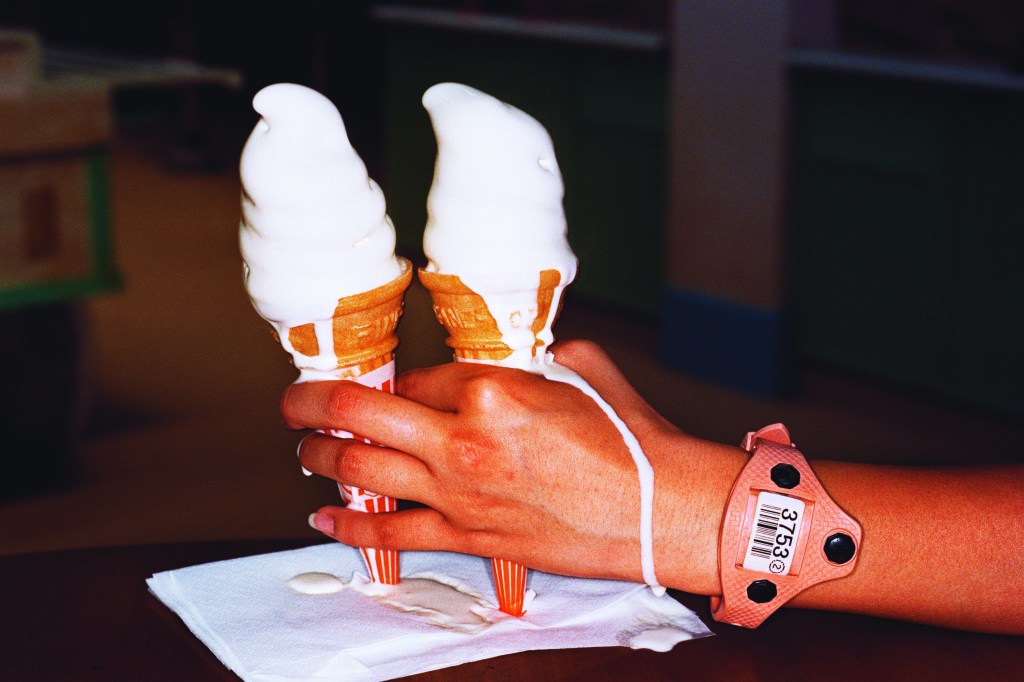
“I was hanging around a petrol station like a pervert. Photographers at the time would have said that this was the craziest place to take a picture. Because it’s a very unglamorous subject matter. Boring. There’s no drama here. But there’s something very interesting about boring. Something that seems very ordinary at the time becomes interesting when you look back at it, almost 40 years later: the pump has changed, the clothes have changed, the car has changed. It tells us something about consumerism, and how we depend on oil and petrol.”
Martin Parr
On my way to work in the mornings, I watch people on public transport. About 90% of them are looking at their phones. No one lifts their head to look at the people around them, the road, or even the empty air. Ordinary life doesn’t seem that interesting. What the algorithm suggests to us is clearly more appealing…
No need to act heroic here; I look at my phone all the time too. I look at ordinary lives through my phone, for example. One of the photographers who has become quite popular recently Sam Youkilis, captures everyday life. A man stirring his tea, a cat pausing to look around, a master making baklava, a barista doing his daily service… There are also countless accounts about everyday life in the Aegean and the Mediterranean. The shimmer of the sea, the redness of tomatoes, women gossiping… Daily, ordinary, yet beautiful lives. If you know how to look… And well, we look — through our phones…
One of those who truly knows how to look at people is the British photographer Martin Parr, who passed away recently. He was born in 1952 in Epsom, a town that feels like a perfect showcase of the English middle class. Epsom is uneventful, a suburb where life doesn’t really offer big surprises. Influenced by his photographer grandfather, Parr begins taking photographs in this quiet town. After studying photography in Manchester, he first produces black-and-white work, then shifts to color in the 1980s. Through color, he develops his signature style: bright, exaggerated, and at times unsettling, focusing on the ordinary.
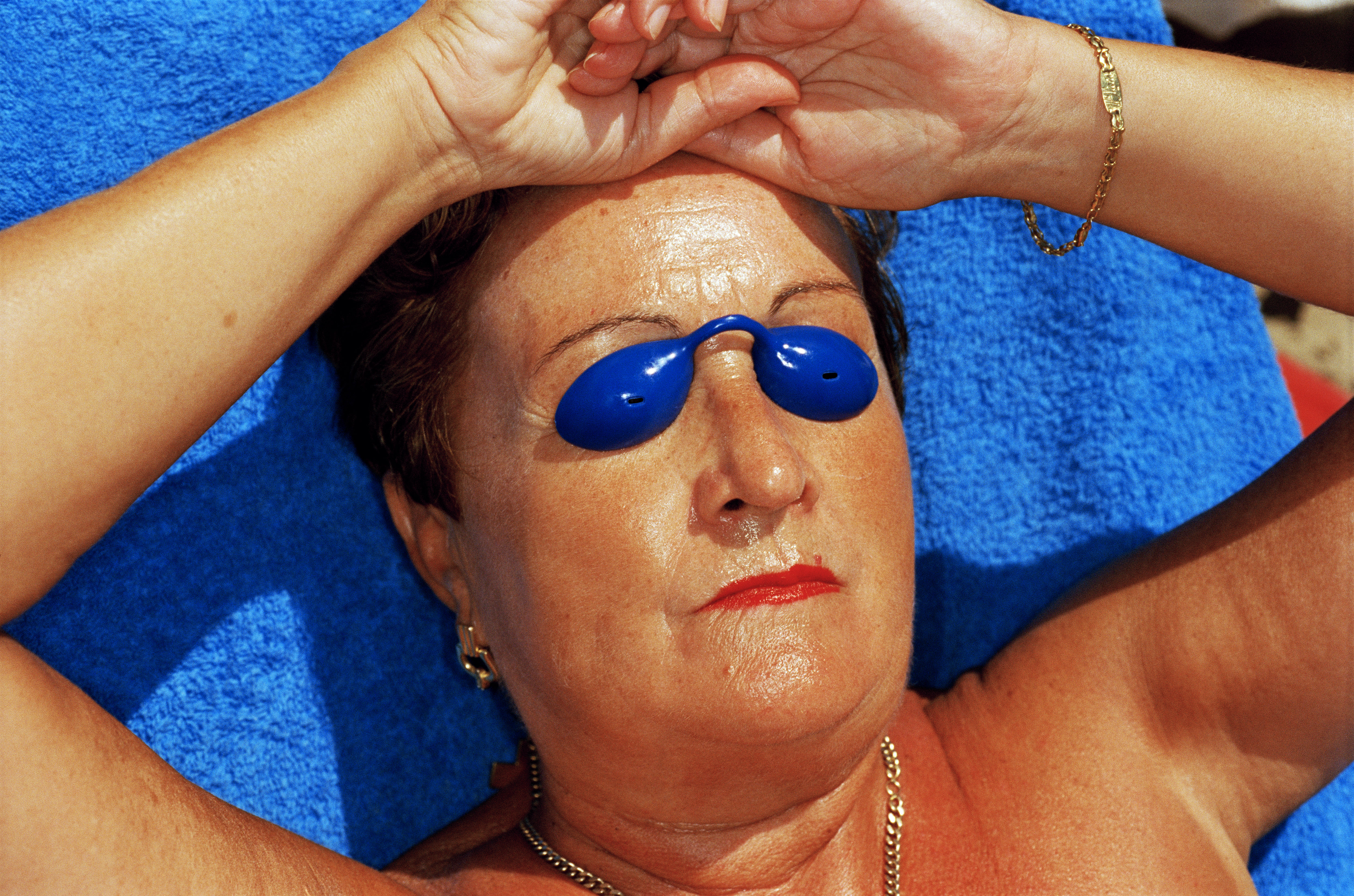
His work was so unconventional for its time that his admission to Magnum Photos in 1994 became quite controversial. Some members found his ironic, occasionally mocking, and colorful approach too superficial or not “serious” enough. His membership was even heavily debated.
In short, Parr’s story is about someone who realized how strange, funny, and sometimes uncomfortable seemingly ordinary things can be. The first time I saw his photographs, I remember wrinkled, overly dressed elderly people, party girls, strange dogs… They were displayed on giant billboards in the streets of Vevey, Switzerland, as part of the Images Vevey photo festival — a quiet town not particularly used to stepping outside its comfort zone. I was struck by that strangeness, by those colors. Later, I discovered that Parr had come to Istanbul for a collaboration with Mavi, and I went on a wild search for the promotional book they had printed.
More recently, I found myself chasing Parr again, this time in Paris, at Jeu de Paume. Running until May 24, the exhibition Global Warning, consisting of 180 photographs, brings together 50 years of his ironic, unsparing, and often humorous work. The exhibition offers a non-judgmental look at Western society’s unsustainable relationship with the planet.
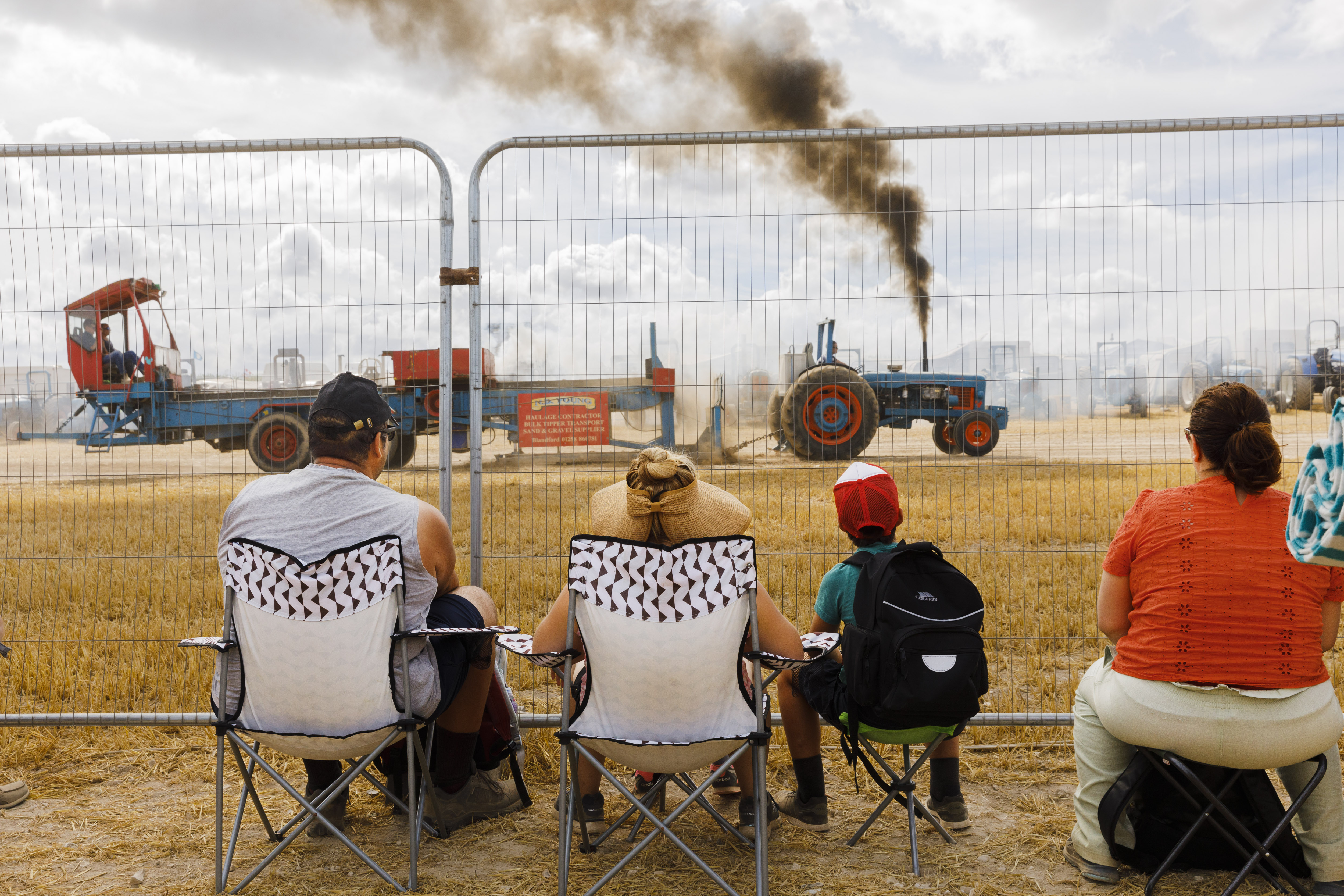
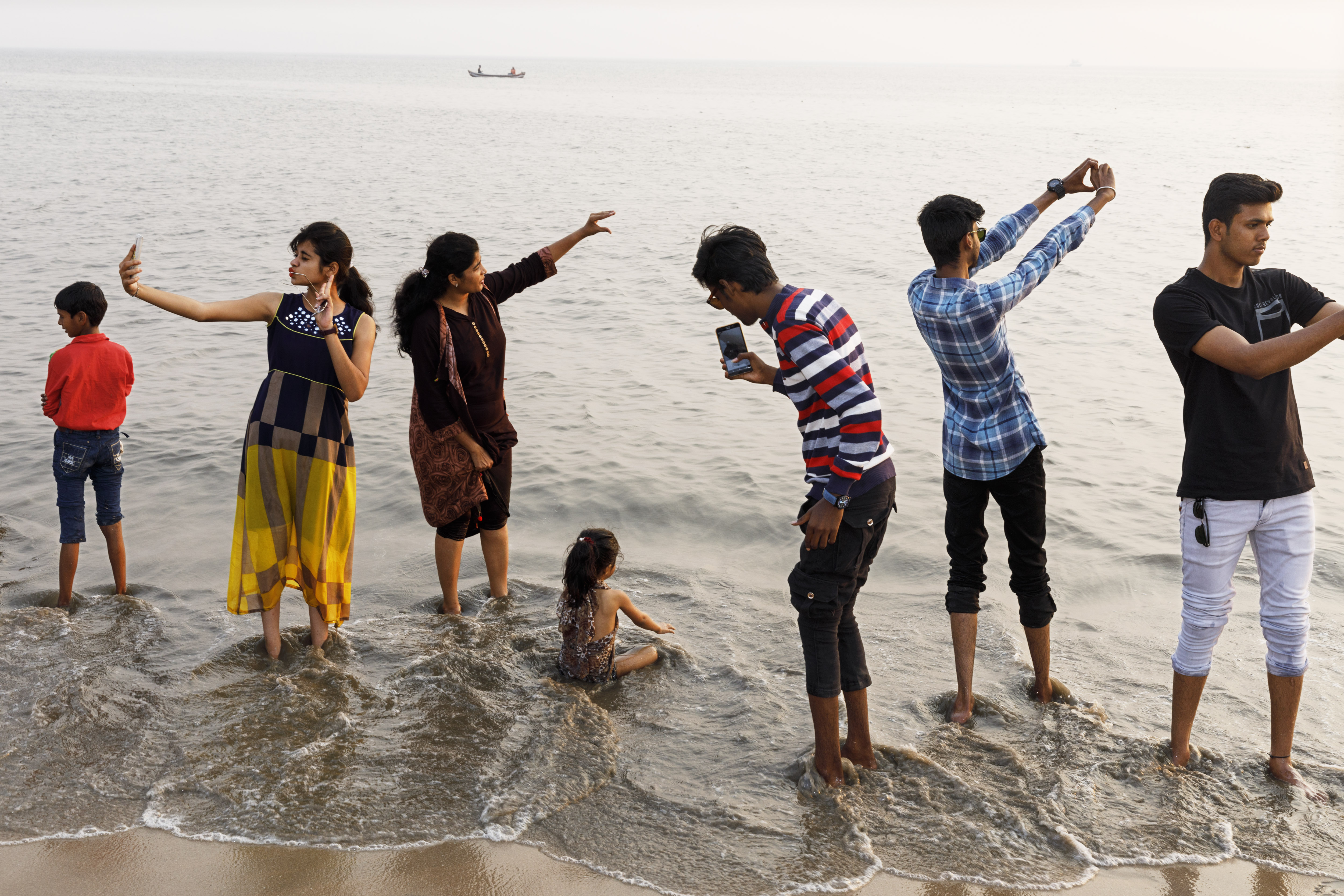
People crowding beaches, piled on top of each other just to swim or sunbathe; no space left to step; overflowing ashtrays and trash scattered everywhere in the name of leisure… People fighting over discounts in shopping malls; decorating animals, even killing and stuffing them; tourists obsessively taking photos; others endlessly glued to their phones… Plastics, bad food, over-tanned skin, the exaggerated luxury tastes of the wealthy, tacky souvenirs… These are all scenes Parr observes and presents to us.
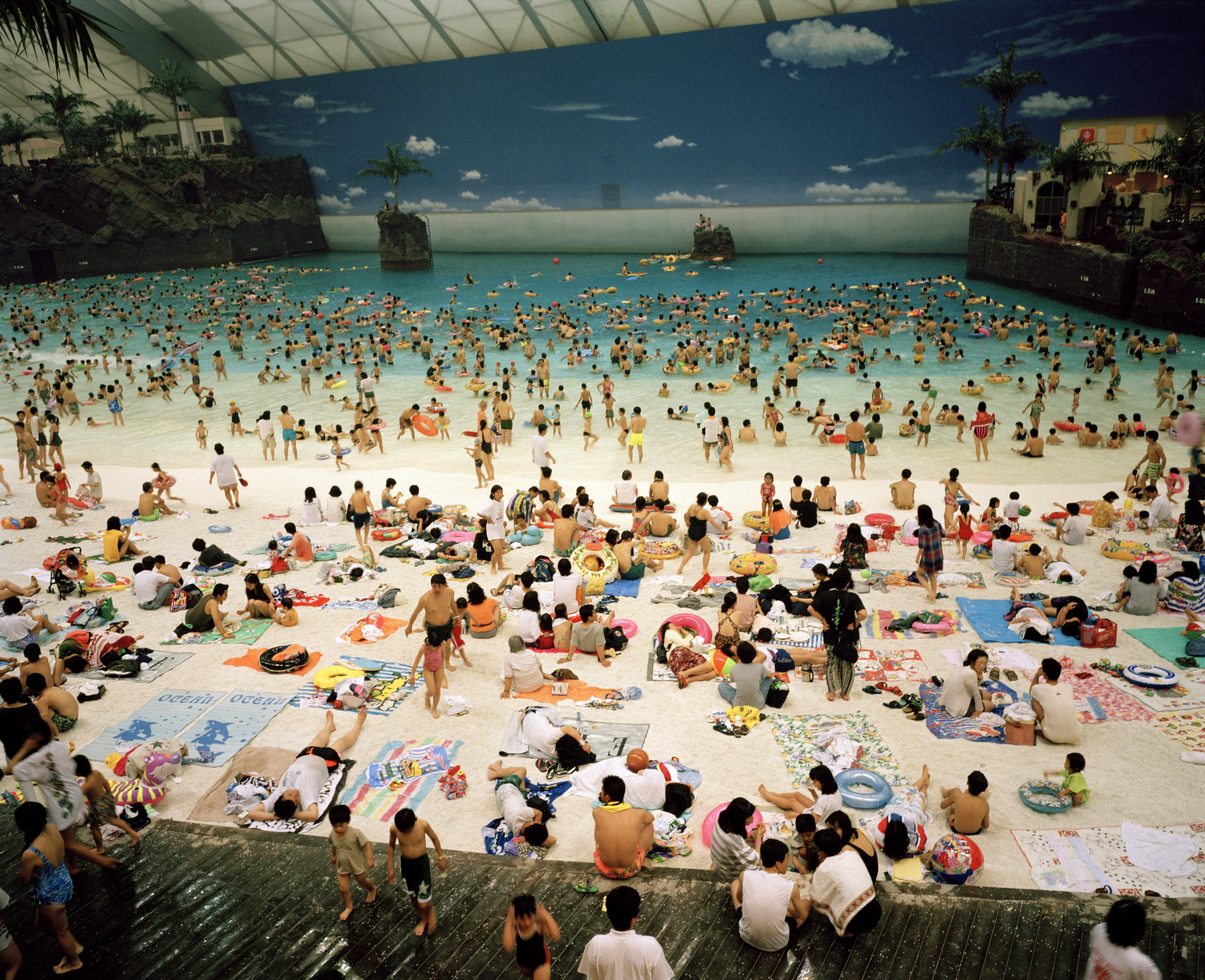
Looking at these images, you might assume that the artist is questioning humanity. But that’s the thing: he isn’t. He simply observes and documents. For instance, despite not knowing how to swim, Parr travels from England to Spain, and from there to China, photographing beaches across different countries. “You can read a lot about a country by looking at its beaches,” he says. Across cultures, the beach is that rare public space in which all absurdities and quirky national behavior can be found.
Or take another example: he goes to photograph the opening of the first McDonald’s in Moscow in 1991, capturing people’s excitement in encountering this American icon. Looking at those images, I’m reminded of my own childhood in İzmir; lining up with excitement at the first McDonald’s that opened in Montrö Square in the 90s. Or, more recently, of myself as a tourist in Paris, stopping every few minutes to take photos… If Martin Parr were to look at these ordinary things I do, I suddenly become interesting.
“I often wonder why people buy souvenirs when they are so patently useless. The urge to buy souvenirs seems second only to the compulsion to take photographs. Every time I visit a charity shop, I marvel at the shelves full of discarded souvenirs. They have fulfilled their functions as the climax of the pilgrimage and they can therefore be given away. There must be a dawning realisation that the purchase is entirely pointless.”
He doesn’t judge, doesn’t try to fix or make sense of things, doesn’t aestheticize. With all its clichés, ordinariness, beauty, and ugliness, he finds humanity interesting. He watches, observes, and photographs. And you look, and you think: we are such strange creatures…
It feels almost like watching animals in a zoo through Parr’s eyes, the human world becomes fascinating. Sweating, eating messily, waiting, getting bored…
These ordinary moments, people, and objects become interesting when seen the way Martin Parr sees them. In this sense, I find myself comparing him to another British artist I love: David Hockney. Hockney also observes people and especially nature, the seasons. He looks with great curiosity and attention at paths we walk without noticing, at seasonal transitions we’ve witnessed countless times. Like Parr, he uses striking colors to make us see the world anew, through his eyes.
People, animals, objects, trees… all ordinary, all unsurprising — and yet, precisely because of that, deeply interesting. Leaving the exhibition, I find myself thinking: instead of constantly waiting for the next step or the next big surprise, maybe we need to learn how to truly look. Because when you do, even the ugliest, cheapest, most artificial things become interesting.
A new resolution: we stop waiting for surprises. We learn how to see.
 Irmak Özer - Kültür Sanat Yaşam
Yorum bırakın